Revive Hydrogen is a Kentucky-based brand that sells PEM (proton-exchange-membrane) hydrogen generators through its own e-commerce site. The company positions its products for both home and clinical use, marketing professional-grade hydrogen inhalation to wellness-oriented consumers. The brand's homepage emphasizes independently tested purity, premium PEM technology, and a three-year warranty—attributes designed to differentiate in a crowded US wellness-hardware market.
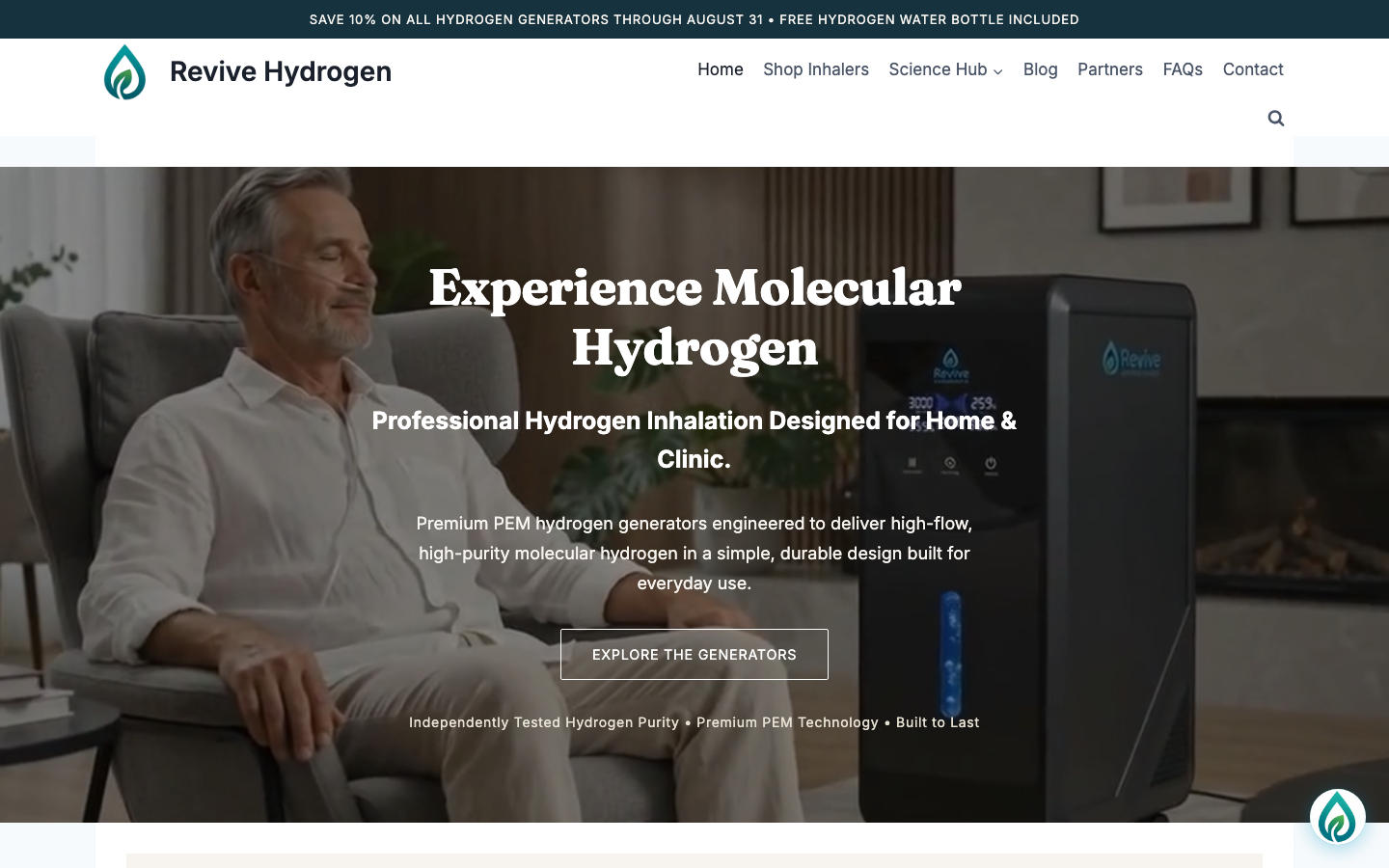
For H2 Wellness Hub, the relevant question is not whether hydrogen inhalation devices exist—they do, in increasing numbers across multiple markets. The more useful question is what a US DTC generator brand reveals about how consumer-hydrogen hardware is being positioned, priced, and communicated in a regulatory environment that remains deliberately agnostic about wellness claims.
Why this is a Cases item
The United States is one of the largest consumer-hydrogen hardware markets globally, yet it lacks a hydrogen-wellness-specific regulatory framework. The FDA's position on hydrogen inhalation devices—neither broadly permitted as medical devices nor explicitly prohibited as consumer products—creates a compliance gray zone. Within that zone, brands like Revive Hydrogen must make product-positioning choices that carry both marketing and regulatory implications.
This case is relevant because it illustrates three dynamics common to US hydrogen-hardware brands:
- PEM technology framing: Revive Hydrogen markets its generators as using PEM electrolysis—a method associated with medical-grade hydrogen production. How a consumer brand deploys medical-adjacent language while maintaining general-wellness positioning is a compliance tightrope that reveals category-level assumptions.
- Flow rate and purity claims: The brand highlights independently tested purity and high flow rates as primary differentiators. In a market without standardized testing protocols for consumer hydrogen devices, these claims require consumers to trust the brand's own testing infrastructure—an accountability gap worth examining.
- Home-clinic dual positioning: By marketing to both home users and clinical settings, Revive Hydrogen straddles a boundary that carries different regulatory implications. What works as a consumer-wellness product may require different documentation when positioned for professional use.
What the homepage does not establish
This is a company-reported brand page. All product descriptions, benefit claims, purity data, and flow-rate specifications are company statements. The page does not establish clinical efficacy, FDA regulatory compliance with US medical-device standards, or independent third-party performance verification for any product in the line.
The homepage presents brand-level marketing language with references to scientific literature and practitioner endorsements. However, product-specific technical documentation—including electrolysis method details, membrane specifications, hydrogen output stability over time, and comparisons to clinical-grade devices—is not available on the primary landing page. The brand's Science Hub provides topic-level research summaries, but these are general hydrogen-literature overviews rather than product-specific validation.
Three practical questions for US-market observers
1. How do PEM consumer devices compare to clinical-grade specifications?
Revive Hydrogen positions its generators for both home and clinic use. But clinical-grade hydrogen generators typically operate under different quality-control, maintenance, and documentation standards than consumer electronics. Does the brand provide the kind of service history, calibration data, and output-verification that clinical users would require?
2. What does "independently tested" mean in practice?
Independent testing can range from a one-time third-party lab report to ongoing ISO-standard quality control. For consumer-hydrogen hardware, the depth and frequency of independent verification matter as much as the claim itself. Does Revive Hydrogen disclose its testing frequency, laboratory credentials, and the specific parameters that were measured?
3. How does the brand navigate FTC advertising standards?
Under FTC guidelines, health-related claims for consumer products must be supported by competent and reliable scientific evidence. Revive Hydrogen's marketing references multiple health-benefit categories—inflammation, cognitive function, athletic recovery, cardiovascular support. How the brand substantiates these references, and whether it maintains appropriate disclaimers, is a case study in US wellness-marketing compliance.
How to use this case
For US hydrogen-hardware brands, Revive Hydrogen illustrates the branding architecture needed to compete in a DTC-first market where consumer trust depends on transparency signals rather than retail intermediation. For distributors evaluating US hydrogen generators, it highlights the importance of requesting product-level technical specifications beyond homepage marketing. For industry observers studying regulatory dynamics, it is a snapshot of how US hydrogen-wellness brands position themselves within the FDA's implicit tolerance zone.
Revive Hydrogen company homepage
Company website · Source type: company-reported brand information. The source is linked for verification and context; the editorial analysis above is H2 Wellness Hub's independent industry interpretation.
Visit the homepage ↗