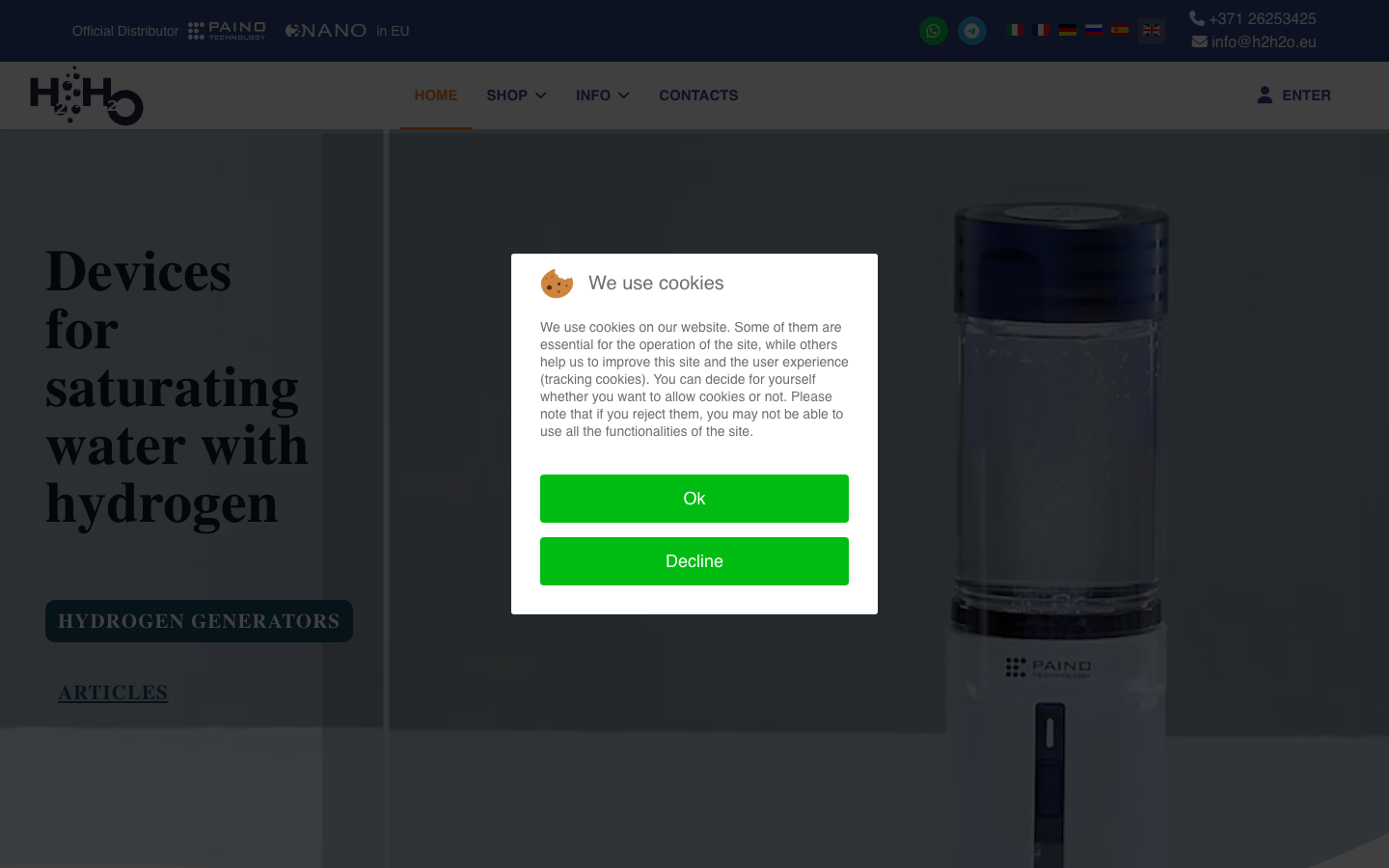
H2H2O offers hydrogen-generation devices to the European market through its online platform. The company positions its products within the growing hydrogen-water device category, where consumers can generate hydrogen-rich water at home rather than purchasing pre-packaged hydrogen-water products.
For H2 Wellness Hub, the relevant question is not whether hydrogen-water devices work in principle—electrolysis is well-established chemistry. The more useful question is what a European hydrogen-device brand must demonstrate to win consumer trust in a market where product safety, electrical compliance, and transparent specifications are baseline expectations rather than differentiators.
Why this is a Cases item
The European hydrogen-device market operates under different constraints than Asian or North American markets. The CE marking system, EU consumer-protection directives, and varying national regulations on electrical wellness devices create a compliance landscape that shapes everything from product design to marketing language.
H2H2O's market approach is worth examining because it illustrates how a hydrogen-device company navigates these conditions:
- Regulatory compliance: CE marking for hydrogen-generation devices involves electrical safety, electromagnetic compatibility, and material-safety requirements. How a company communicates compliance status matters for consumer confidence.
- Technical transparency: European consumers expect detailed specifications—electrolysis method, electrode material, power consumption, water-quality requirements, and hydrogen-output claims tied to specific operating conditions.
- After-sales infrastructure: Warranty terms, service networks, and replacement-part availability are more important in device categories than in consumable products. European consumers evaluate these factors before purchase.
- Market positioning: In a market where premium kitchen appliances and wellness devices compete for the same consumer budget, hydrogen generators must justify their price relative to established alternatives.
What the product presence does not establish
H2H2O's product availability is a commercial fact. It does not constitute CE marking certification (which must be verified through the company's own compliance documentation), clinical validation of health claims, medical-device classification, or evidence that the device delivers specific biological outcomes.
A company website with product listings serves a commercial function. It communicates product range and intended positioning. It does not, by itself, provide the independently verified safety testing, compliance documentation, or comparative performance data that would allow European consumers to evaluate the device against regulatory standards and competing products.
Three practical observations
1. Europe's device market demands documentation, not just claims
European consumers are accustomed to evaluating product specifications, safety certifications, and warranty terms before purchasing wellness hardware. A hydrogen-device brand that does not make this documentation readily available faces a trust deficit that marketing alone cannot overcome.
2. Hydrogen concentration from devices is condition-dependent
Unlike pre-packaged hydrogen water, device-generated hydrogen concentration varies with water source, temperature, mineral content, and operating time. This variability means that a single concentration claim is insufficient—consumers need operating-condition context to understand what they will actually get.
3. The European market may reward convergence with kitchen-appliance norms
Hydrogen-water generators occupy a similar consumer-consideration set as premium water filters, alkaline-ionizers, and specialty kettles. Brands that present their products within this familiar context—rather than as standalone hydrogen-science devices—may find easier retail and consumer adoption.
How to use this case
For brands considering European hydrogen-device market entry, H2H2O's presence illustrates the importance of compliance documentation and technical transparency. For distributors evaluating EU hydrogen devices, the case underscores the need to verify CE marking status, electrical safety testing, and warranty infrastructure. For industry observers, it adds a data point to the developing picture of how hydrogen-water hardware is being positioned across different regulatory environments globally.
H2H2O hydrogen generation devices
Company website · Product information. The source is linked for verification and context; the editorial analysis above is H2 Wellness Hub's independent industry interpretation.
Visit H2H2O ↗